#EWF25
BritishCouncil_Logo_Indigo_RGB
ukfiet-large

UKFIET Conference 2025

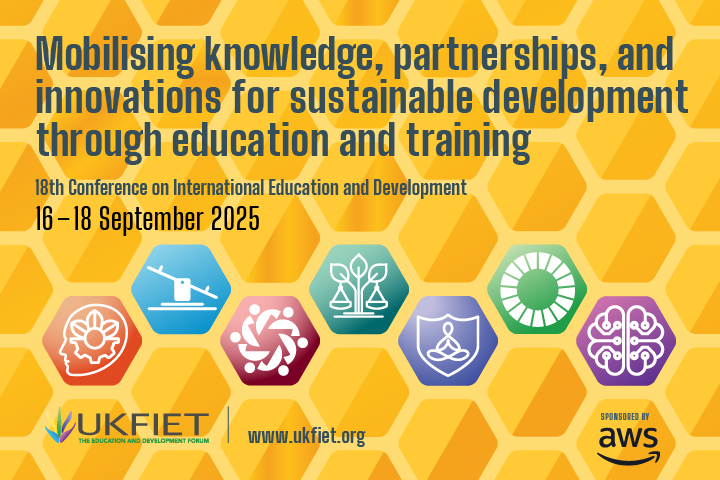
UKFIET 2025 Conference: "Graphic for the UKFIET 18th Conference on International Education and Development, themed ‘Mobilising knowledge, partnerships, and innovations for sustainable development through education and training,’ taking place 16–18 September 2025. The background is a honeycomb pattern in yellow tones. The bottom row features seven hexagon icons in different colors, each representing aspects of the conference: a heart with interconnected lines, a book with a pen, two leaves, a circular collaboration symbol, an abstract person figure, a geometric pattern, and a brain. UKFIET logo and website appear at the bottom left, with an AWS sponsorship logo at the bottom right."

About

The 2025 UKFIET International Conference on Education and Development will draw together representatives from government ministries, academic institutions, NGOs and other individuals from organisations both public and voluntary, commercial and non-commercial with interests or expertise in international education and development issues.

As noted by the Conference Chair Emma Sarton and Deputy Chair Francesca Salvi, the conference arrives at a critical inflection point for global education. With pressures like climate crisis, shrinking development funding (e.g., from USAID and UK departments), and increasing humanitarian needs, education must be reimagined as a transformative catalyst. The conference seeks to galvanise bold, collaborative action grounded in equity and sustainability.

About the British Council

The  British Council  is the UK’s international organisation for cultural relations and educational opportunities. We support peace and prosperity by building connections, understanding and trust between people in the UK and countries worldwide. We do this through our work in arts and culture, education and the English language. We work with people in over 200 countries and territories and are on the ground in more than 100 countries. In 2024–25 we reached 599 million people.


Agenda

Time

Session information: British Council 


11:00am — 5:00pm 

Tuesday, 16 September 2025

Poster

English Skills Plus: Enhancing employability skills of rural youth in India


The poster will highlight the two-year partnership project (2021-23) between the British Council and the state of Tamil Nadu, India, for a youth skilling programme, part of the Government of India’s youth skilling mission. The project developed an inclusive curriculum for English communication skills in manufacturing, retail and IT services sectors, emphasising collaboration among educational stakeholders—including students, investors, and governments—to effectively combine content and skills.

Find out more (requires login)

Presenter:

  • Mr Affan Javed: British Council (South Asia)

11:30am — 1:00pm 

Tuesday, 16 September 2025

Oral

Localising policy reforms for more resilient, equitable learning in Rwanda

The Rwandan education system has recently undergone extensive reform, with policy conceived at central level and directed outwards to districts, sectors and schools. With power held at the centre rather than the periphery, teachers lack agency to influence policy design or push back on directives, including those with limited evidence: they are required to comply and deliver reforms at local level to ensure successful implementation, often with limited training or support.

Find out more (requires login).

Presenters:
  • Dr Leanne Cameron: Education Development Trust (United Kingdom)
  • Mr Julian Parry: British Council (United Kingdom) 
11:30am - 1:00pm  Tuesday, 16 September 2025

Oral

Collaborative pathways: Transforming education systems in South Asia through multi-tier government partnerships collaborations

Leveraging the ongoing British Council teacher professional development partnerships in South Asia, we emphasise that government collaborations across different tiers-yield the most sustainable, and high-quality outcomes. These partnerships lead to leveraging state resources, securing multi-stakeholder buy-in, testing large scale technology deployment and accessing a large cohort of long-term employed teachers.

Find out more (requires login) 

Presenter

  • Mr. Affan Javed: British Council (South Asia)

4:00pm — 5:30pm

Tuesday, 16 September 2025

Oral 

Mobilising knowledge for more inclusive school-based professional development for women teachers and teachers with disabilities in Rwanda

This paper reports on a Participatory Action Research (PAR) project focused on lower secondary teachers that asks: What changes can be made to support more inclusive school-based TPD for knowledge mobilisation? This is the fourth phase of a longer process evaluation of an English Language Improvement programme for 6,000 teachers, led by the British Council and researchers from the Universities of Rwanda and Sussex. Started in January 2024, findings from case study research in 10 schools and systems level interviews have fed into successive workshops in which WT and TWD took prominent roles.

Find out more (requires login).

Presenters:

  • Dr John Simpson: British Council (Sub-Saharan Africa)
  • Prof Jo Westbrook: University of Sussex (United Kingdom)
  • Mr Pierre Barayagwiza: University of Rwanda

9:00am — 10:30am   
Wednesday, 17 September 2025

Workshop

Learning Leaders: Peer-learning for girls in conflict-affected and underprivileged contexts

Peer-led learning approaches have proven effective and empowering in supporting girls’ education, especially in conflict-affected and challenging contexts. This creative session aims to explore the peer-led learning approach to improve outcomes for girls, using research and insights from British Council projects in India, Nepal, Pakistan and Myanmar. The session addresses the sub-theme of inclusion and intersectionality, to answer: How can we challenge social norms to enable equitable access to education for empowerment? Specifically, how can peer learning support adolescent girls, who are facing exclusion due to intersections of gender, religion, ethnicity and conflict to access educational opportunities.

Find out more (requires login).

Presenters:
  • Ms Radhika Gholkar: British Council (India)
  • Dr Louise Wetheridge: Independent consultant (United Kingdom)
  • Ms Polly Kirby: Independent consultant (United Kingdom)
1:30pm - 3:00pm
Wednesday, 17 September 2025


Panel

Innovations in multilingual education for sustainable futures

Bringing the languages learners use everyday in their homes and communities into the classroom enhances learning. Yet, up to 40% of children worldwide do not have access to basic education in a language they can understand. Language policies and practices are a major contributor to stagnation in progress towards the 2025 SDG4 learning outcomes benchmarks.

This symposium showcases programme- and system-level innovations in multilingual education from four continents. It highlights efforts to include minoritised languages in education, curriculum development, assessment, and teacher learning. Presenters also address challenges such as resistance from policymakers and communities, while exploring how multilingual innovations respond to global sustainability crises.

Find out more (requires login).

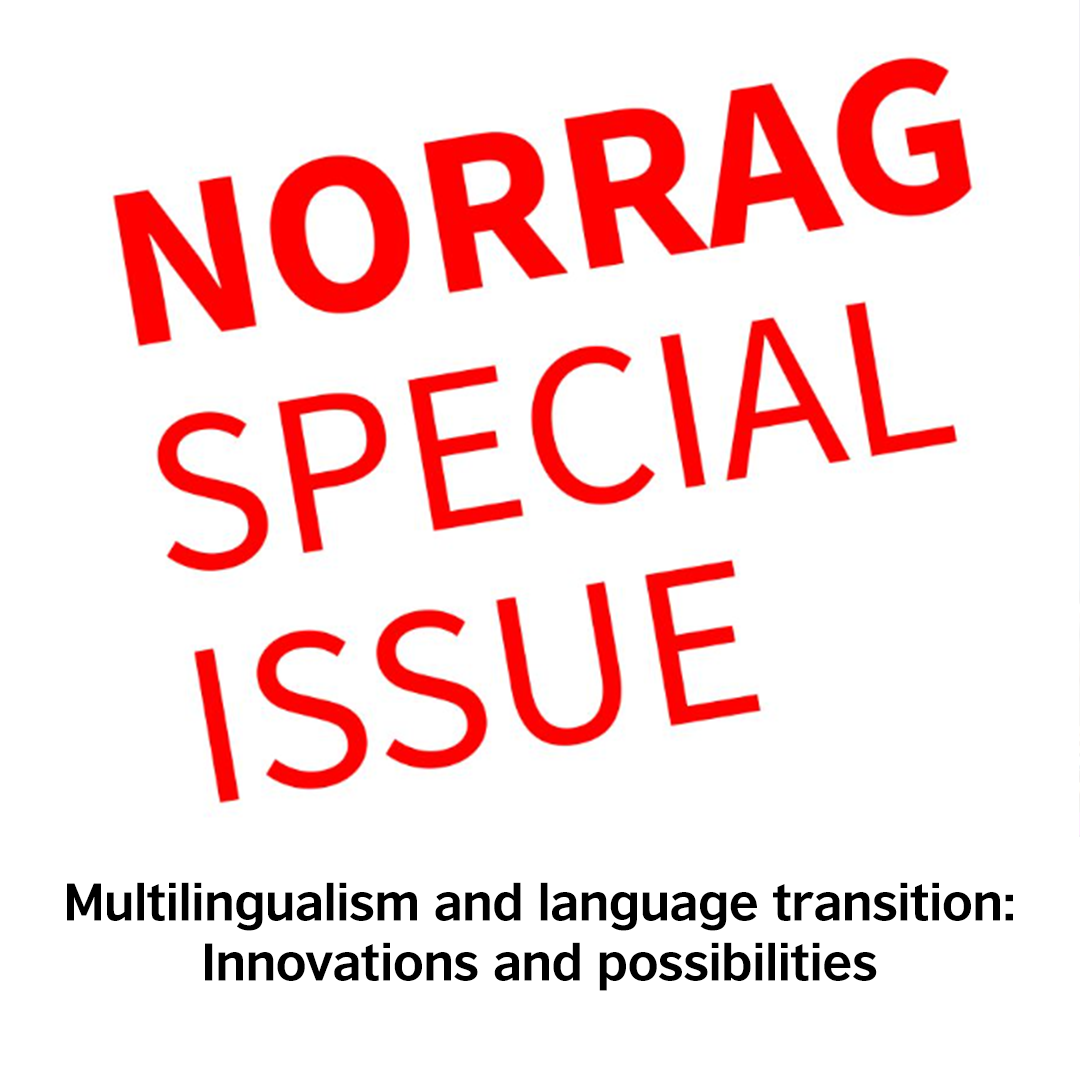
The discussion will draw actionable insights for policies and practices to enhance learning for sustainable futures. Presentations are based on new research to be published in Norrag Special Issue #11 – Multilingualism and Language Transition: Innovations and Possibilities (May 2025).

Presenters:

Dr. Barbara Trudell — SIL Africa Learning & Development (Kenya)
Prof. Jo Westbrook — University of Sussex (United Kingdom)
Dr. Rajib Timalsina — Tribhuvan University (Nepa)
Prof. Mats Deutschmann — Örebro University (Sweden)
Ms. Usha Rane — Pratham International (India)
Dr. Felipe J. Hevia — CIESAS (Mexico)
Dr. Clyde Ancarno — King’s College London (United Kingdom)
Ms. Amapola Alama — UNESCO-IBE (Switzerland)

1:30pm — 3:00pm

Thursday, 18 September 2025

Oral

Understanding Barriers to Inclusion: A lifecycle framework for girls and women in ASEAN

This paper is an output of the UK’s flagship education programme in Southeast Asia, the ASEAN-UK supporting the advancement of girls’ education (ASEAN-UK SAGE) programme, delivered by the British Council and SEAMEO secretariat in partnership with EdTech Hub and ACER. Within this initiative, ACER in collaboration with the UK’s Foreign, Commonwealth and Development Office (FCDO), has undertaken a study applying a lifecycle monitoring framework to better understand the barriers to inclusion faced by girls, women and marginalised groups in ASEAN.

The analysis tracks across three lifecycle stages—early childhood, adolescence, and adulthood—to identify how inequities accumulate and reinforce differences in human development outcomes. By drawing attention to the intersecting and compounding nature of disadvantage, this framework offers evidence and insights to inform gender-responsive and inclusive education, social and economic policy across the ASEAN region.

Find out more (requires login).

Presenters:

Ms Jeaniene Spink: Australian Council for Educational Research
Ms Isla Gilmore: FCDO (United Kingdom)

Education in emergencies

Education in emergencies

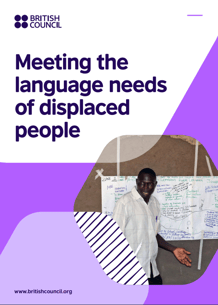
Meeting the language needs of displaced people

Meeting Language needs of displaced people

Meeting the language needs of displaced people

Core themes

  • Language as access to services, education and livelihoods.
  • Trauma-aware, flexible provision; safe learning spaces.
  • Recognition of prior learning and pathways.
Tools and frameworks
  • Context analyses; modular, mobile-friendly
  • English; teacher support.
Examples / case studies
  • Programmes in camps/host communities with NGOs and ministries.
Why it matters
  • Language support accelerates integration and dignity for displaced learners.

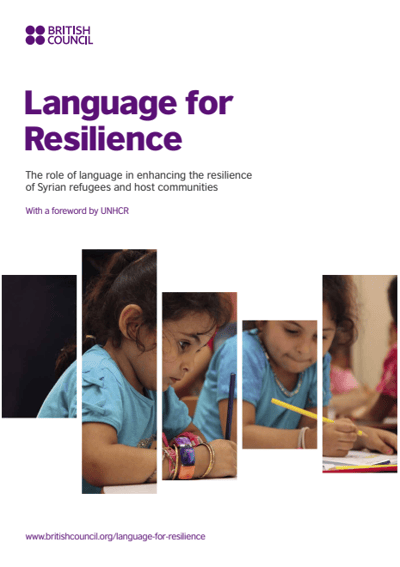
Language for Resilience


Language for Resilience

Language for resilience: The role of language in enhancing the resilience of Syrian refugees and host communities

Core themes:

  • Language builds resilience by giving voice, promoting cohesion and enabling access to education, work, and services.
  • Five dimensions: home language and literacy, access to opportunities, social cohesion, addressing trauma and teacher/system capacity.
  • Targeted language programmes in crisis contexts strengthen both refugee and host communities.

Tools and frameworks

  • Five principles of language for resilience:
    1. Home language and literacy
    2. Education, training, employment
    3. Social cohesion
    4. Addressing trauma
    5. Teacher/system capacity

Examples / case studies:

  • Research in Jordan, Lebanon, Turkey and Kurdistan Region of Iraq.
  • Evidence of better attendance, inclusion, and psycho-social support through language learning.

Why it matters:

  • Language is key to resilience, inclusion and identity.
  • Strengthens individuals, communities and institutions.
  • Informs scalable programmes and global education policy.

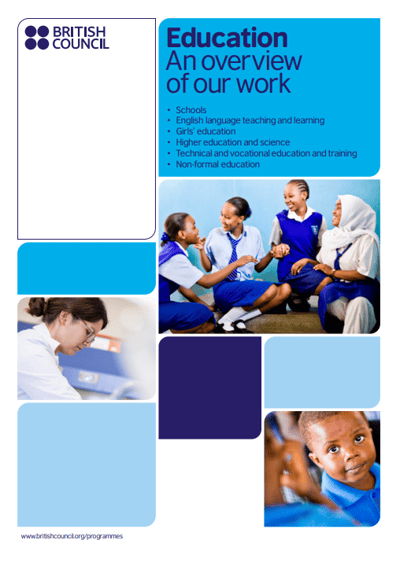
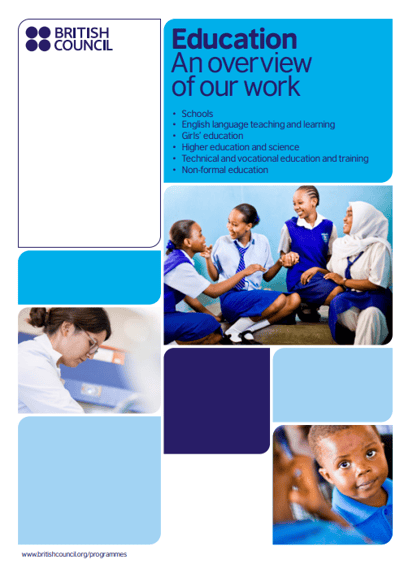
Education - An overview  of our work

Education: An overview of our work

Meeting the language needs of displaced people

Core themes
Language as access to services, education and livelihoods.
Trauma-aware, flexible provision; safe learning spaces.
Recognition of prior learning and pathways.

Tools and frameworks
Context analyses; modular, mobile-friendly English; teacher support.

Examples / case studies
Programmes in camps/host communities with NGOs and ministries.

Why it matters
Language support accelerates integration and dignity for displaced learners.


English and school education


Education An overview  of our work-1

Education: An Overview of Our Work

Education: An Overview of Our Work

Core themes:
  • The British Council delivers education programmes worldwide, building inclusion, skills and opportunities aligned with the Sustainable Development Goals.

Tools and frameworks:

  • Key initiatives include EDGE (girls’ education), 21st Century Schools, Connecting Classrooms, Aawaz II, BIRAX and Women in STEM.

Why it matters:

  • With nearly 90 years’ experience in 100+ countries, the British Council strengthens individuals, institutions and systems for sustainable global development.

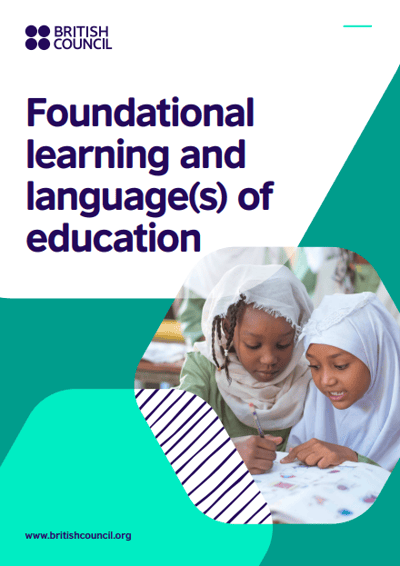
Foundational learning brochure

Foundational learning brochure

Foundational learning and language(s) of education

Core themes
  • Mother-tongue-based, multilingual education for early years.
  • Language-in-education policy aligned to literacy goals.
  • Teacher support for transition between languages.

Tools and frameworks

  • Curriculum/assessment alignment; materials for bilingual classrooms.
Examples / case studies
  • Adaptations in African and Asian contexts to improve early literacy.
Why it matters
  • Using familiar languages boosts foundational reading and learning.

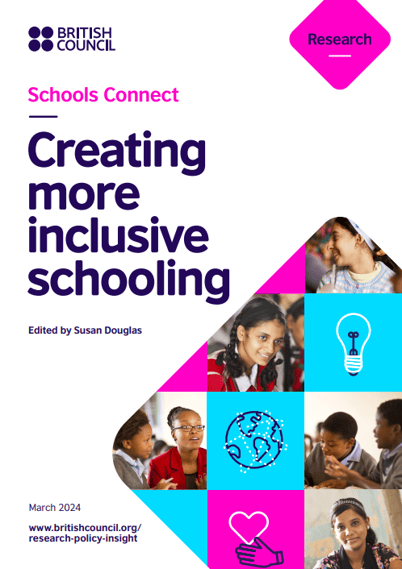
creating more inclusive schooling, edited by Susan Douglas. March 2024. British council policy and insight

Schools Connect — Creating more inclusive schooling (Mar 2024)

  • Schools Connect — Creating more inclusive schooling (March 2024)

    Core themes
    Belonging, wellbeing and equity embedded in school culture.
    Teacher agency + collaborative inquiry.
    Community partnerships to reduce exclusion.

    Tools and frameworks
    Practical inclusion toolkit; action-research cycles.

    Examples / case studies
    Multi-country vignettes showing improved participation and climate.

    Why it matters
    Inclusive schools raise engagement and outcomes for all learners. 

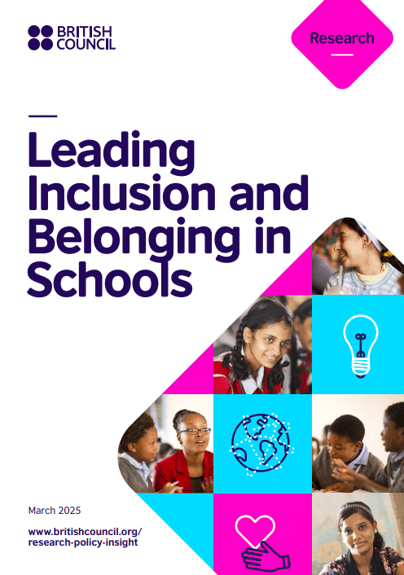
Leading Inclusion and Belonging in Schools


Leading Inclusion and Belonging in Schools

  • Leading inclusion and belonging in schools

    Core themes
    Move beyond access to belonging — where all learners feel safe, valued and included.
    Leadership is central to embedding inclusion and equity.
    Key focus areas: disability (SEND), gender equality and language of instruction.

    Tools and frameworks
    Five Principles of Belonging: Safety, Presence, Voice, Connectivity, Agency.
    Prism of Place and Belonging: tool for understanding students’ lived experiences.
    Learning Teams: collaborative model reshaping teacher-student support.

    Examples / case studies
    India – NEP 2020 reforms embedding inclusion.
    Kenya – National SEND policies into practice.
    Nigeria – Gender-responsive pedagogy in schools.
    Ethiopia – Leadership initiatives advancing gender equality.
    Iraq – Integrating disabled learners into mainstream schools.
    Egypt – Adapting instruction for diverse learners.

    Why it matters
    Belonging boosts student confidence and learning, strengthens teacher practice and fosters positive family-school relationships — making it a cornerstone of effective, equitable education. 

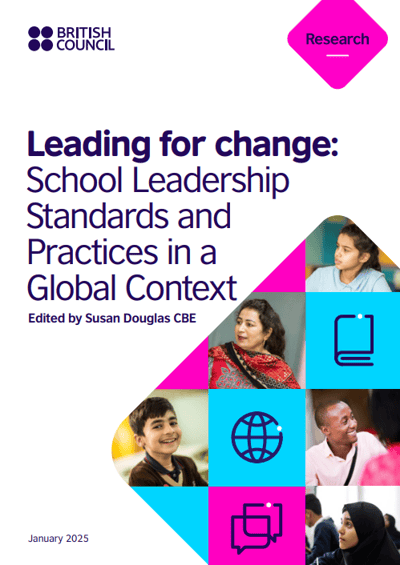
Leading for Change School Leadership Standards and Practices in a Global Context

Leading for Change: School Leadership Standards and Practices in a Global Context

  • Leading for Change: School Leadership Standards and Practices (Jan 2025)

    Core themes
    Clear leadership standards lift teaching quality and equity.
    Instructional and inclusive leadership drive learning.
    Global lessons adapted to local context.

    Tools and frameworks
    Standards and practice guides; actionable strategies for heads.


    Examples / case studies
    Pakistan, Lebanon, Kenya — leadership improving collaboration and outcomes.

    Why it matters
    Empowered leaders create safe, high-performing schools where all belong.

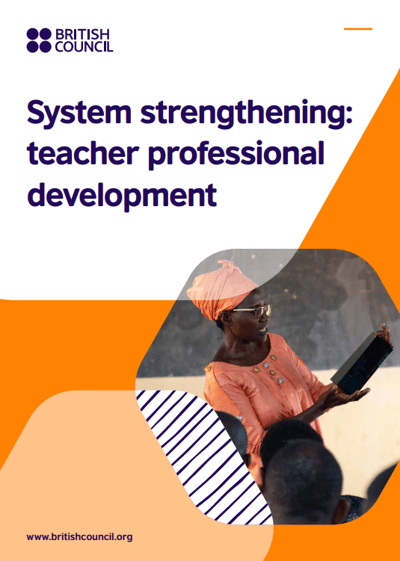
System strengthening - teacher professional development

System strengthening brochure

  • System strengthening: Teacher professional development

    Core themes
    National PD frameworks; standards and progression pathways.
    Coaching/mentoring and professional communities.
    Data-informed, scalable PD models.

    Tools and frameworks
    Modular PD; blended delivery; QA for training providers.

    Examples / case studies
    Country partnerships aligning PD with policy and school needs.

    Why it matters
    Sustained PD improves classroom practice and student results at scale.

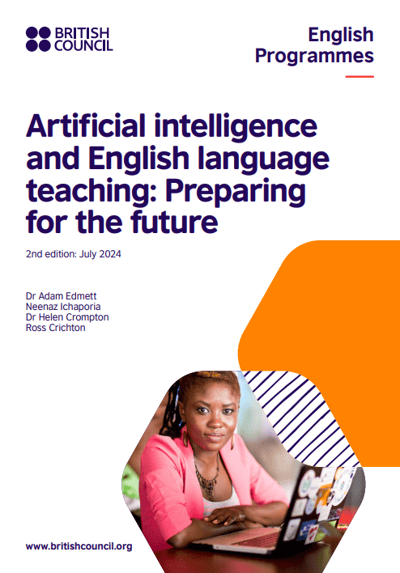
Artificial intelligence and English language teaching Preparing for the future

Artificial intelligence and ELT: Preparing for the future (2nd ed., Jul 2024)

  • Artificial intelligence and ELT: Preparing for the future (2nd ed., Jul 2024)

    Core themes
    AI use-cases in ELT (feedback, adaptive practice, admin).
    Safeguarding, ethics and data privacy.
    Teacher digital competence and change management.

    Tools and frameworks
    Practical classroom scenarios; evaluation checklists for AI tools.

    Examples / case studies
    Global snapshots of AI adoption in schools and language centres.

    Why it matters
    Responsible AI can personalise learning and reduce teacher workload. 


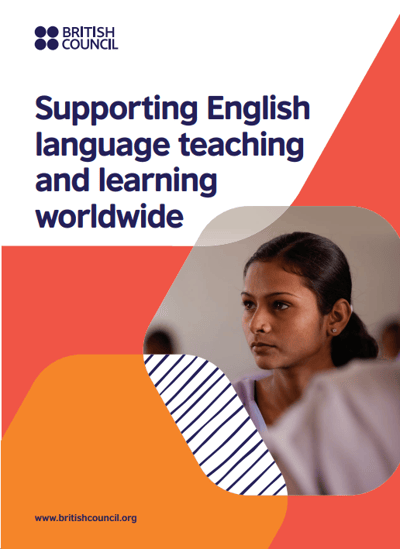
Supporting English language teaching and learning worldwide

Supporting English language teaching and learning worldwide (2024)


  • Supporting English language teaching and learning worldwide (2024)

    Core themes
    National English reforms: policy, curriculum, assessment alignment.
    Teacher professional development at scale (in-service + pre-service).
    Inclusion: girls, refugees and marginalised learners.

    Tools and frameworks
    End-to-end ELT system support; digital and blended PD models.

    Examples / case studies
    Multi-region English programmes integrated with ministries.

    Why it matters
    Coherent ELT systems improve equity, outcomes and workforce skills. 

Insights into English language teaching, learning and assessment

Insights into English language teaching, learning and assessment (Aug 2024)

  • Insights into English language teaching, learning and assessment (Aug 2024)

    Core themes
    Evidence on effective ELT practice and assessment.
    Digital/blended learning and classroom-based assessment.
    Equity and inclusion across ELT contexts.

    Tools and frameworks
    Practitioner briefs summarising research to practice.

    Examples / case studies
    Curated insights for system leaders and teachers. 

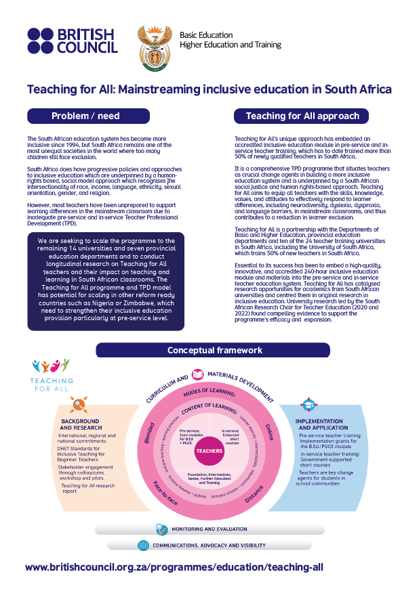
2025 Teaching for All Mainstreaming Inclusive Education in South Africa

Teaching for All — Mainstreaming Inclusive Education in South Africa


  • Teaching for All — Mainstreaming Inclusive Education in South Africa

    Core themes
    Despite progressive policies, inequality persists and many learners face exclusion.
    Teachers often lack preparation for inclusive practice due to weak pre- and in-service training.
    Inclusive education must address intersecting factors (race, income, language, gender, disability, etc.).

    Tools and frameworks
    Accredited 240-hour inclusive education module embedded in teacher education.
    Social justice and human-rights-based approach centred on the social model of disability.
    Teachers positioned as change agents in tackling learner differences (neurodiversity, dyslexia, language barriers).

    Examples / case studies
    Partnership with South African national/provincial departments and 10 of 24 teacher training universities, including UNISA (training 50% of new teachers).
    Research by the South African Research Chair for Teacher Education (2020, 2022) confirms programme’s efficacy.

    Why it matters
    Over 50% of new teachers trained in inclusive practices; expansion planned to remaining universities and provinces, with potential for adaptation in countries like Nigeria and Zimbabwe. 

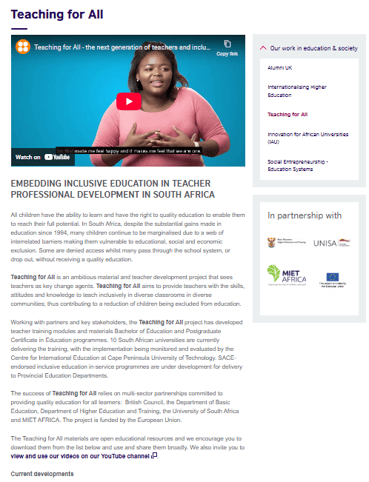
2025 Teaching for All South Africa website

Teaching for All — Mainstreaming Inclusive Education in South Africa

  • Teaching for All — Mainstreaming Inclusive Education in South Africa

    Core themes
    Despite progressive policies, inequality persists and many learners face exclusion.
    Teachers often lack preparation for inclusive practice due to weak pre- and in-service training.
    Inclusive education must address intersecting factors (race, income, language, gender, disability, etc.).

    Tools and frameworks
    Accredited 240-hour inclusive education module embedded in teacher education.
    Social justice and human-rights-based approach centred on the social model of disability.
    Teachers positioned as change agents in tackling learner differences (neurodiversity, dyslexia, language barriers).

    Examples / case studies
    Partnership with South African national/provincial departments and 10 of 24 teacher training universities, including UNISA (training 50% of new teachers).
    Research by the South African Research Chair for Teacher Education (2020, 2022) confirms programme’s efficacy.

    Why it matters
    Over 50% of new teachers trained in inclusive practices; expansion planned to remaining universities and provinces, with potential for adaptation in countries like Nigeria and Zimbabwe. 

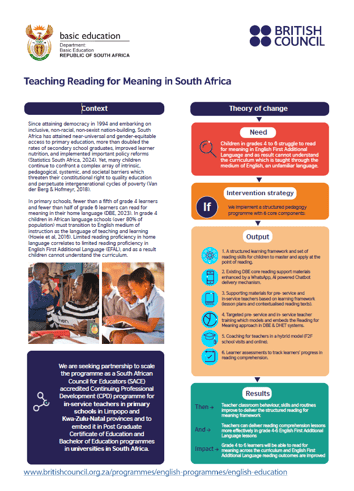
teaching reading for meaning in South Africa

Teaching for All — South Africa

  • Teaching for All — South Africa

    Core themes
    Inclusive education embedded in ITE and in-service CPD.
    Teachers as change agents; reduction of exclusion.
    Province-level rollout with monitoring and evaluation.

    Tools and frameworks
    Open OER modules; SACE-endorsed CPD; multi-stakeholder governance.

    Examples / case studies
    10 universities delivering; Western and Eastern Cape implementations scaling nationally.

    Why it matters
    Systematic IE training shifts practice at scale across provinces. 

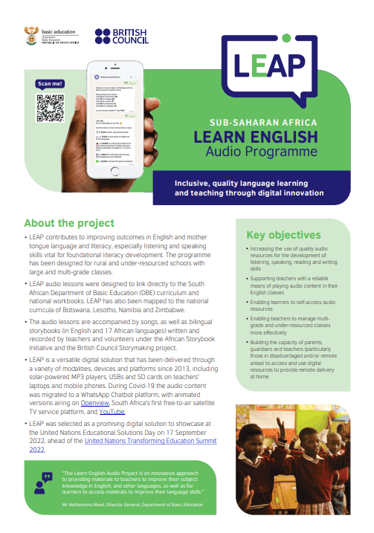
Learn English Audio Programme LEAP South Africa


LEAP — Learn English Audio Programme (Sub-Saharan Africa)


  • LEAP — Learn English Audio Programme (Sub-Saharan Africa)

    Core themes
    Low-cost audio for foundational literacy (L1 + English).
    Reaching multi-grade/under-resourced schools and homes.
    Curriculum-mapped content and bilingual storybooks.

    Tools and frameworks
    WhatsApp/chatbot, radio/TV, offline devices; teacher guides.

    Examples / case studies
    South Africa (DBE-aligned), mapped to Botswana/Lesotho/Namibia/Zimbabwe curricula.

    Why it matters
    Scalable audio boosts listening/speaking and access in low-connectivity contexts. 

2025 Rwanda STELIR leaflet

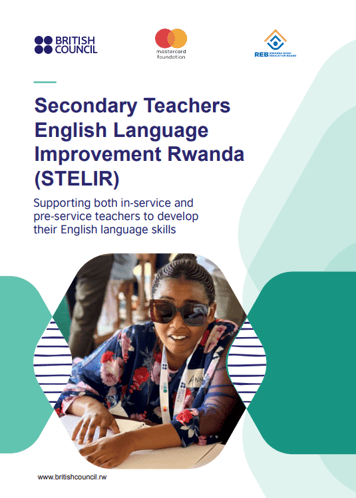
STELIR — Rwanda (Secondary Teachers’ English Language Improvement) 

  • STELIR — Rwanda (Secondary Teachers’ English Language Improvement)

    Core themes
    Raise lower-secondary teachers’ English to B1+.
    Blended model: intensive, online, school-based mentoring.
    Gender-responsive design and local trainer cadre.

    Tools and frameworks
    Aptis placement; 30/60-hour intensives; 60/90-hour online + weekly live sessions.

    Examples / case studies
    6,000 in-service + 1,000 pre-service teachers across 14 districts; URCE integration.

    Why it matters
    Better teacher English → clearer subject teaching → improved student learning. 


Girls education

Capture

Our Work in Girls Education

Our work in girls’ education

Core themes
Systems approach: policy, leadership, teacher PD, community engagement.
Access + quality: tackle barriers from safety to gender norms.
Evidence + partnerships: FCDO/EU collaborations; scaling what works.

Tools and frameworks
Whole-system technical assistance (e.g., QESSP Ethiopia, ZESSTA Zambia).
Gender-sensitive pedagogy, curricula, and community mobilisation.

Examples / case studies
Ethiopia (QESSP), Zambia (ZESSTA, EDGE), Nepal (PSSGER), Turkey (Gender Equality in Education).

Why it matters
Scaling system reforms boosts girls’ participation and learning at national level


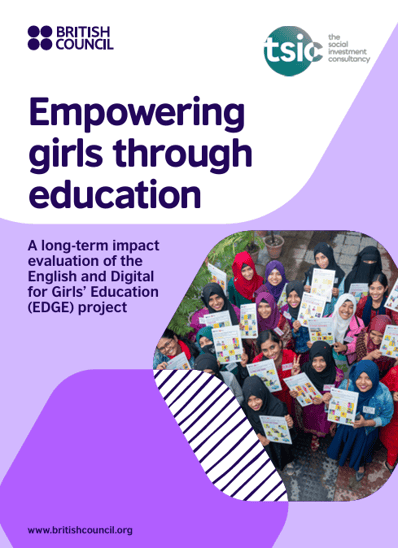
English and Digital for Girls Education Long term impact evalaution 2025 - Report

English and Digital for Girls' Education Long term impact evaluation 2025 - Report

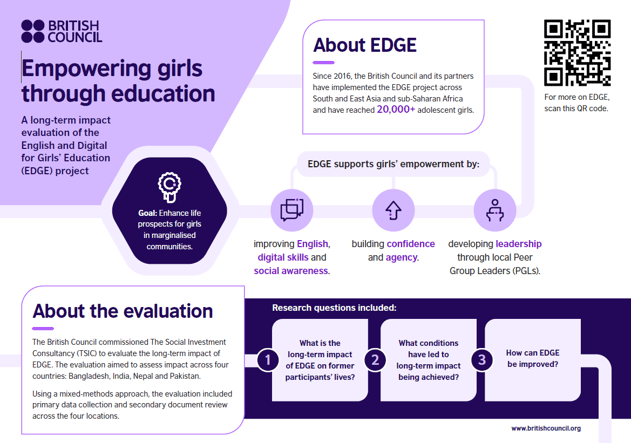
Empowering girls through education — EDGE (Long-term impact / 2025)

Core themes
Peer-led clubs build English, digital skills, confidence, agency.
Safe local spaces reduce travel risk and social barriers.
Leadership via Peer Group Leaders (PGLs).

Tools and frameworks
Community clubs; facilitator-trained PGLs; mixed-methods evaluation.

Examples / case studies
Bangladesh, India, Nepal, Pakistan; 20,000+ girls reached since 2016.

Why it matters
Sustained gains in skills and empowerment translate into life opportunities.


EDGE Empowering Girls Through Education Infographic

English and Digital for Girls' Education Long term impact evaluation 2025 - Infographic

EDGE — Infographic (impact highlights)

Core themes
Goal: enhance life prospects for marginalised girls.
Outcomes: English/digital gains, confidence, leadership.
Multi-country implementation since 2016.

Tools and frameworks
Long-term impact study (TSIC); mixed-methods approach.

Examples / case studies
Bangladesh, India, Nepal, Pakistan — evaluation across four countries.

Why it matters
EDGE shows peer-led models can scale skills and agency effectively.


ASEAN Sage-1

Supporting the Advancement of Girls’ Education Programme (ASEAN–UK SAGE)

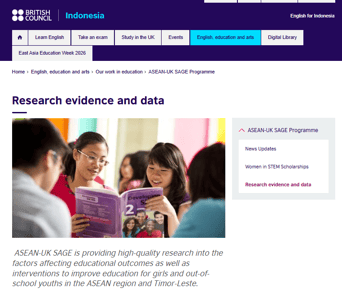
ASEAN-UK SAGE — Research evidence and data

Core themes
Girls’ education and out-of-school youth in ASEAN/Timor-Leste.
EdTech evidence for SEND and foundational learning.
Data gap mapping to guide policy.

Tools and frameworks
Rapid evidence reviews; country scans; interactive data maps.

Examples / case studies

Cambodia, Lao PDR, Timor-Leste scans; girls’ education and digital skills reports.

Why it matters
Region-specific evidence steers investments to the biggest needs.


Higher and vocational education

Thumbnail image

Name and link to publication

Overview

HE education sparks opportunities

Education sparks opportunities Our work in higher education

Education sparks opportunities — Our work in higher education (Apr 2024)

Core themes

International partnerships grow skills, research, and employability.

Quality assurance and TNE support widen global access.

Mobility + inclusion: scholarships and equity in

HE.


Tools and frameworks

Going Global Partnerships; capacity-building for QA and governance.


Examples / case studies

Multi-country partnership brokering; support for TNE ecosystems.

Why it matters

Strategic HE cooperation strengthens economies and student outcomes.


 Next Generation research series


Next Generation research series

Next Generation — Research series


Core themes

Youth voice in policy on education, skills, civic life.

Country-specific diagnostics during periods of change.

Equity lenses (women/girls; regional variation).


Tools and frameworks

Large-scale surveys + qualitative studies;

thematic briefs.


Examples / case studies

UK 2024, Bangladesh 2024, Iraq/Sudan 2024; “What we know” briefs on women/girls.

Why it matters

Youth insights shape responsive, future-ready policy and programmes.


 A global framework for transnational education engagement


Global Transnational Education Framework

Global Transnational Education (TNE) Framework (Nov 2024)


Core themes

Common language and data to analyse TNE environments.

Enabling regulation and QA; student-centred outcomes.

Positioning national TNE within global landscape.


Tools and frameworks

QAA/Education Insight-developed framework; interactive visuals.


Examples / case studies

Guidance for national HE bodies to benchmark and plan TNE.


Why it matters

Consistent analysis strengthens partnerships and TNE quality.

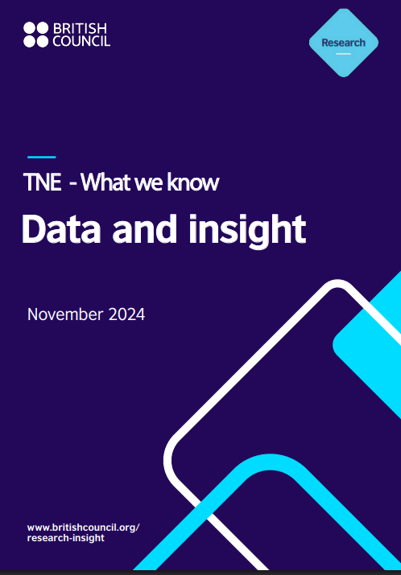
 transnational-education-what-we-know


Transnational Education - What We Know

Transnational Education — What We Know (Nov 2024)


Core themes

Data/insights on UK TNE; enabling environments.

Student experience and local/global impact. Evolving TNE landscape and policy shifts.


Tools and frameworks

Six concise briefs aligned to TNE Strategy 2023–25.


Examples / case studies

Country/region insights and evidence sources for decision-makers.


Why it matters

Targeted evidence helps design better, more equitable TNE


NORRAG special issue Multilingualism and Language Transition - Innovations and Possibilities
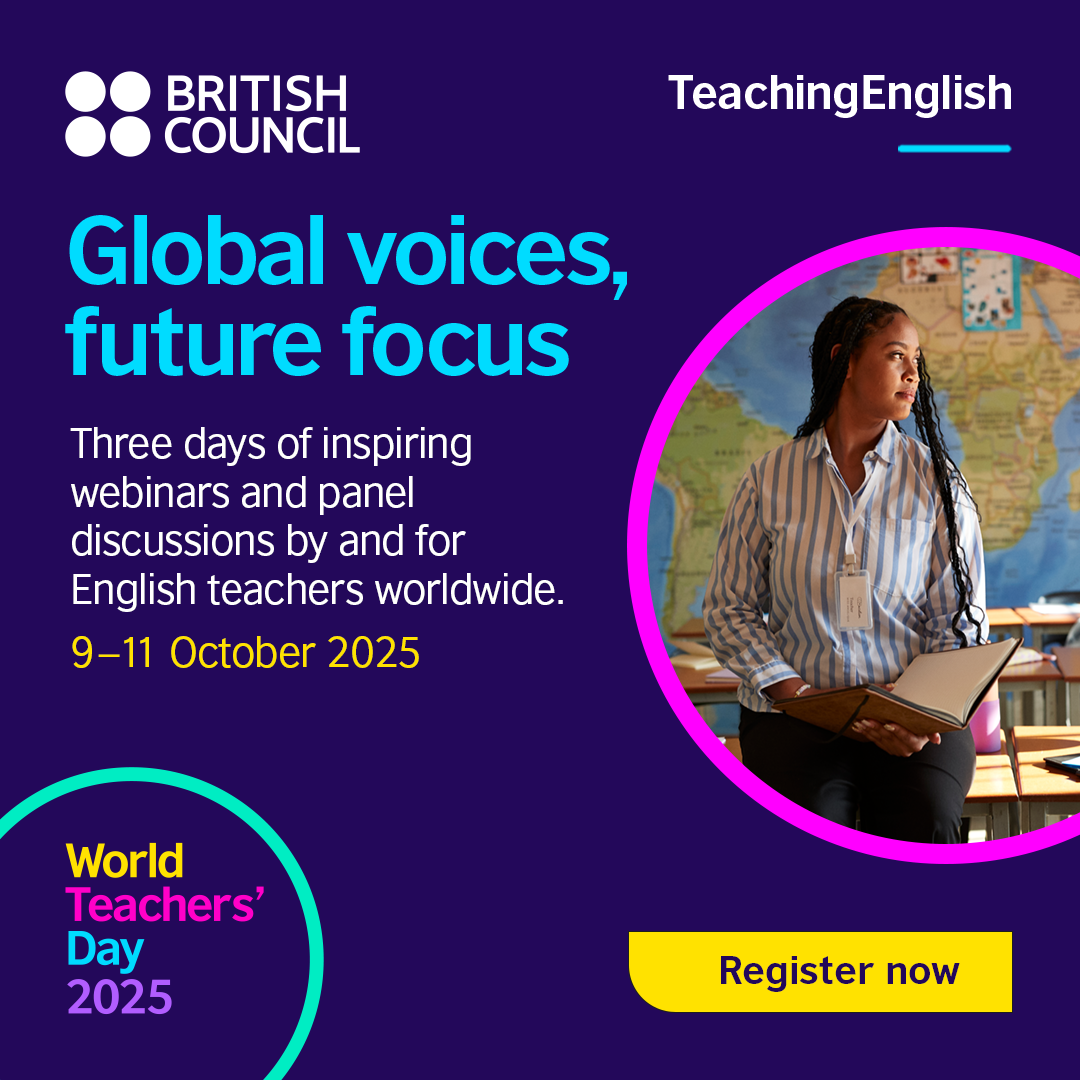
This image is an announcement poster from the British Council TeachingEnglish initiative.  Here are the key details from it:  Event Title: Global voices, future focus  Event Type: Three days of inspiring webinars and panel discussions by and for English teachers worldwide.  Dates: 9–11 October 2025  Occasion: Linked to World Teachers’ Day 2025  Organizer: British Council  Call to Action: Register now  It features a teacher sitting with a notebook in front of a classroom world map, reinforcing the global theme.
This image is a promotional banner for an education event. Here are the key details:  Event Name: DEVED25  Theme: Reimagining the future of education in the Asia-Pacific  Dates: 11–13 November 2025  Location: State Library Victoria, Melbourne, Australia  Organizers/Supporters:  Australian Government Department of Foreign Affairs and Trade  UK International Development (Foreign, Commonwealth & Development Office)  ACER (Australian Council for Educational Research)  Call to Action: Register now at www.deved.org  It uses a blue background with bright design elements and includes an image of a teacher with students on the right side.